Saturday, 12 August 2023
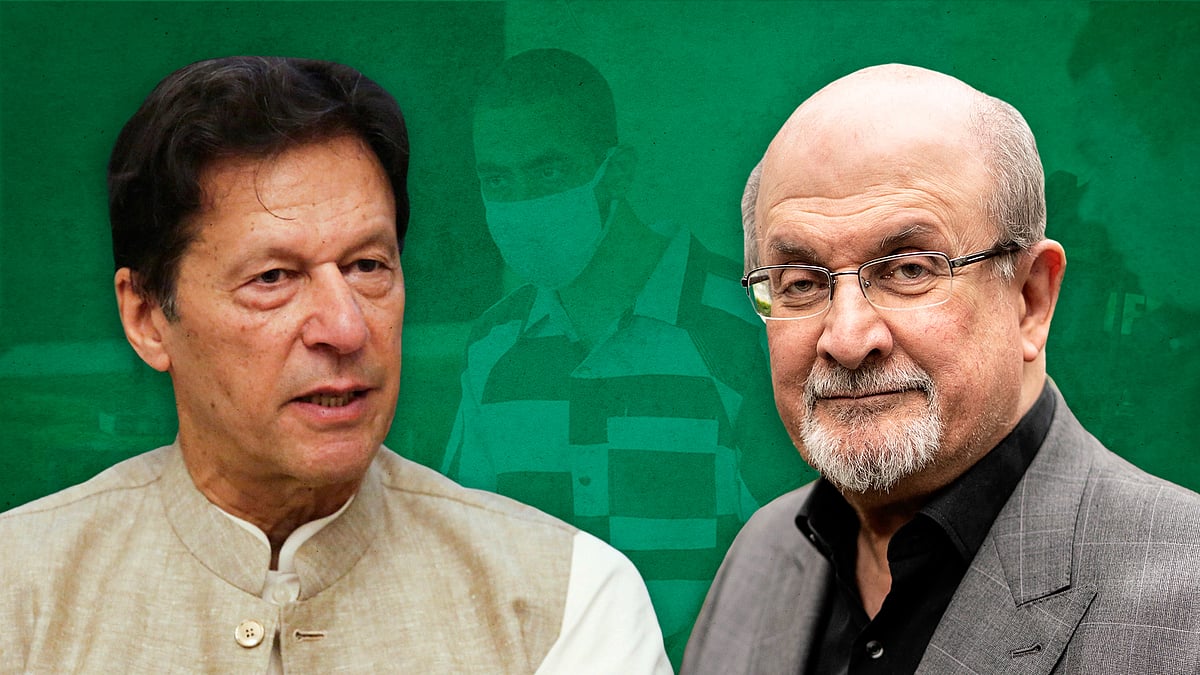
THE MEASURE OF THE MAN By Mitali Saran
Thursday, 20 July 2023
BUDDY BENCH
Wednesday, 19 July 2023
DO MEDICINES REALLY EXPIRE OR ARE WE BEING TAKEN FOR A RIDE?*
A Family of Doctors in England & in Mumbai* have been hammering the point that *medicines don’t expire....*
By Richard Altschuler
If a bottle of Tylenol, (Paracetamol) for example, says something like "Do not use after June 1998," and it is August 2002, should you take the Tylenol? Should you discard it? Can you get hurt if you take it? Will it simply have lost its potency and do you no good?
In other words, are drug manufacturers being honest with us when they put an expiration date on their medications, or is the practice of dating just another drug industry scam, to get us to buy new medications when the old ones that purportedly have *expired* are still perfectly good?
These☝ are the pressing points I wanted to investigate.
I immediately scoured the medical databases & general literature for the answer to my question about drug expiration labelling. And voila, no sooner than I could say *Screwed again by the pharmaceutical industry,* I had my answer.
*Here are the simple facts:*👇🏻
FIRST, the *Expiration date, required by law in the United States, beginning in 1979, specifies only the date the manufacturer guarantees the full potency and safety of the drug -- it does not mean how long the drug is actually "good" or safe to use.*
SECOND, *medical authorities uniformly say it is safe to take drugs past their expiration date -- no matter how "expired" the drugs purportedly are*
*Studies show that expired drugs may lose some of their potency over time*
*Even 10 years after the "expiration date," most drugs have a good deal of their original potency*.
*One of the largest studies ever conducted that supports the above points about "expired drug" was done by the US military nearly 18 years ago, according to a feature story inThe Wall Street Journal (March 29, 2000), reported by Laurie P. Cohen*
"The military was sitting on a $1 billion stockpile of drugs and facing the daunting process of destroying and replacing its supply every 2 to 3 years. So it began a testing programme to see if it could extend the life of its inventory.
*The testing, conducted by the US Food and Drug Administration (FDA), ultimately covered more than 100 drugs*, prescription and over-the-counter."
The *results showed, about 90% of them were safe and effective “even 15 years past their expiration date...”*
In the light of these results, a former *director of the testing programme, Francis Flaherty, said he concluded that expiration dates put on by manufacturers typically have no bearing on whether a drug is usable for longer period.*
*The expiration date doesn't mean, or even suggest, that the drug will stop being effective after that, nor that it will become harmful*.
*"Manufacturers put expiration dates for marketing, rather than scientific reasons," said Mr. Flaherty, a pharmacist at the FDA until his retirement in 1999* "It's not profitable for them to have products on a shelf for 10 years. They want turnover."
The FDA cautioned there isn't enough evidence from the programme, which is weighed towards drugs used during combat, to conclude most drugs in consumers' medicine cabinets are potent beyond the expiration date.
However, *Joel Davis, a former FDA expiration-date compliance chief, said that* with a handful of exceptions -- notably nitroglycerin, insulin and some liquid antibiotics -- *most drugs are probably as durable as those the agency has tested for the military*.
"Most drugs degrade very slowly," he said. "In all likelihood, you can take a product you have at home for many years."
*when Bayer had tested 4-year-old aspirin, it remained 100% effective*,
Bayer has never tested aspirin beyond 4 years, Mr. Allen said. But Jens Carstensen has.
*Dr. Carstensen, professor emeritus at the University of Wisconsin's (US) pharmacy school*, who wrote what is considered the main text on drug stability, *said, "I did a study of different aspirins, and after 5 years, Bayer was still excellent.” Aspirin, if made correctly, is very stable.*
Now I think I'll take a swig of the 10-year dead package of Alka Seltzer in my medicine chest to ease the nausea I'm feeling from calculating how many billions of dollars the pharmaceutical industry milks out of unknowing consumers every year who discard perfectly good drugs and buy new ones because they trust the industry.
Monday, 15 May 2023
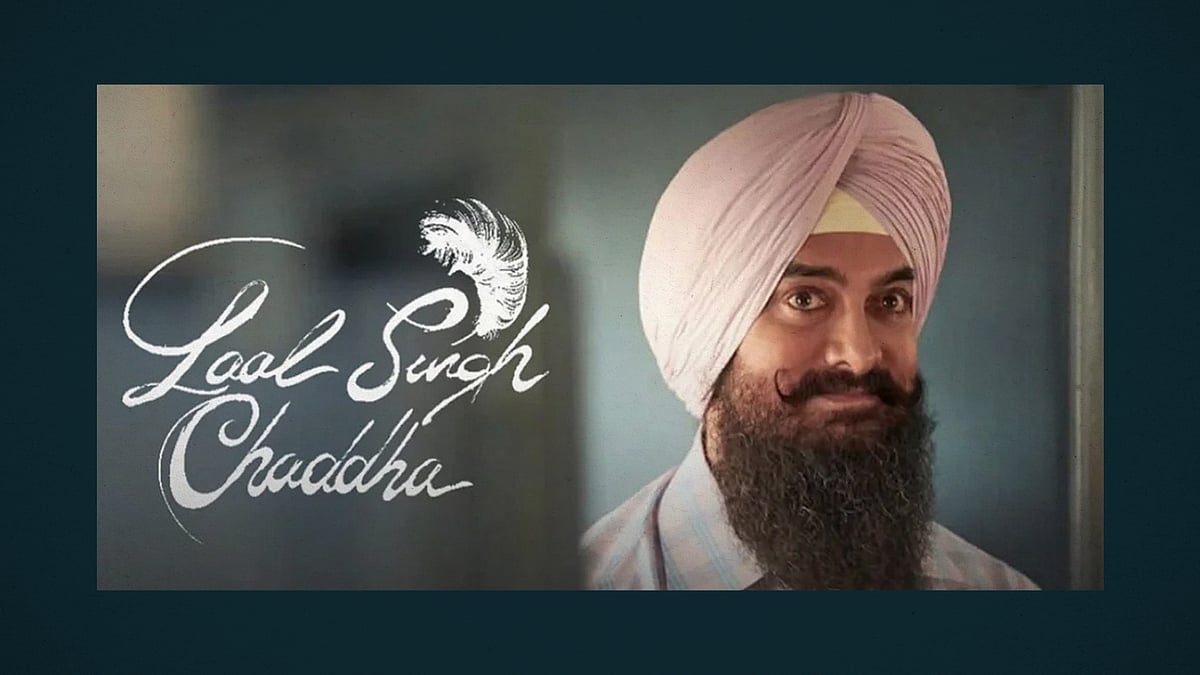
THE GUJARAT STORY
Sunday, 25 December 2022
The psychodynamics of lynch mobs: Grouping, ganging or lynching
Abstract
Introduction
In the middle of Main St in a Southern American town there stood a majestic tree. It held a sacred place in the hearts of the town’s people . . . It blocked traffic . . . It was the potential cause of many accidents . . . And yet it could not be cut down. It was the local lynching tree, and it was performing its duty to perpetually and eternally remind the black town’s people of whom among them had last been hanged from its limbs and who could be next. The tree was awaiting its appointed hour, and the white townspeople were willing to risk inconvenience, injury, and death, even to themselves to keep the tree and the subordinate caste in their places. The tree bore silent witness to black citizens of their eternal lot, and in so doing; it whispered reassurances to the dominant caste of theirs. (Isabel Wilkerson, 2020: 90–91)The method of force which hides itself in secrecy is a method as old as humanity. The kind of thing that men are afraid or ashamed to do openly, and by day, they accomplish secretly, masked, and at night. The method has certain advantages. It uses Fear to cast out Fear; it dares things at which open method hesitates; it may with a certain impunity attack the high and the low; it need hesitate at no outrage of maiming or murder; it shields itself in the mob mind and then throws over all a veil of darkness which becomes glamor. It attracts people who otherwise could not be reached. It harnesses the mob. (Du Bois, 2008: 677)
History of lynching
The psychodynamic structure of a lynch mob
Racism and homophobia are real conditions of all our lives in this place and time. I urge each one of us here to reach down into that deep place of knowledge inside herself and touch that terror and loathing of any difference that lives here. See whose face it wears . . . (Audre Lorde, 1983: 175)
Once that you’ve decided on a killingFirst you make a stone of your heartAnd if you find that your hands are still willingThen you can turn a murder into artNow if you have a taste for this experienceAnd you’re flushed with your very first successThen you must try a twosome or a threesomeAnd you’ll find your conscience bothers you much lessBut you can reach the top of your professionIf you become the leader of the landFor murder is the sport of the electedAnd you don’t need to lift a finger of your hand (Murder by Numbers, The Police, 1983)
Total depravity, human hate . . . do not explain fully the mob spirit in America. Before the wide eyes of the mob is ever the Shape of Fear. Back of the writhing, yelling, cruel-eyed demons who break, destroy, maim and lynch and burn at the stake, is a knot, large or small, of normal human beings, and these human beings at heart are desperately afraid of something. Of what? Of many things, but usually of losing their jobs, being declassed, degraded, or actually disgraced; of losing their hopes, their savings, their plans for their children; of the actual pangs of hunger, of dirt, of crime. (Du Bois, 2008: 677)
It is its nucleus of ordinary men that continually gives the mob its initial and awful impetus. Around this nucleus, to be sure, gather snowball-wise all manner of flotsam, filth and human garbage, and every lewdness of alcohol and current fashion. But all this is the horrible covering of this inner nucleus of Fear. (Du Bois, 2008: 677)
The lynch mob as anti-group
When individuals come together in a group all their individual inhibitions fall away and all the cruel, brutal and destructive instincts, which lie dormant in individuals as relics of a primitive epoch, are stirred up to find free gratification. (Freud, 1921: 79)
reflects underlying fears of annihilation and in particular, deprivation. In the foetid psyches of the lynch mob is a terrible fear of deprivation that makes the ‘other’ not just a threat (the powerful, potent black other) but the one onto whom are projected intense associations of shameful deprivation (the dirt-poor, shameful, black other) and both have to be eradicated. (Nitsun, personal correspondence)
Sunday, 13 November 2022
Three Cases - Five Decades
Thursday, 15 September 2022
Uncovering a ‘humble’ chaiwallah’s billion-dollar lifestyle
It could put every fat cat in Power Delhi and Khan Market to shame even as taxpayers foot Narendra Modi’s astronomical, wasteful bill.
Can Narendra Modi stop his tiresome habit of invoking his humble origins and pitting it against rich and entitled Power Delhi? Modi has never tired of saying he is an “outsider” from Gujarat, and that he hasn’t been—and never will be—accepted by “Lutyens’ Delhi”, a euphemism for the Old Power Establishment or Left, Nehruvian, secular once-governing clique.
Now that may be true: the Liberal-Secularist is vehemently opposed to Modi’s RSS-BJP brand of divisive Hindutva politics. However, Modi is not talking about an ideological battle as much as harping needlessly on his impoverished background: of a workhorse versus a prince, a backward caste versus a well-born, rough versus refined. This, of course, is accompanied by whirring images of Modi in tapasya (rigour of austerity and penance), his mother Heeraben living in a hovel, and other such heart-tugging brand persuasions. Of late, Modi has even jocularly said in interviews, given to favourable news organisations, that his only regret as he nears the completion of his term as prime minister is that he could not make the people of Lutyens’ Delhi his own, nor he part of them. At other times, he has hit back, saying that the “Khan Market gang”, another allusion to Power Delhi, cannot dismantle his image because it was not them which created his image, but it was of his own making through 45 years of tapasya.
This narrative of Modi’s exclusion has been faithfully reinforced by sympathetic and cloying commentators and media persons who insist that chaiwallah Modi (there are still no confirmed reports that he worked as a tea-seller) will never be accepted by the champagne-swilling Lutyens’ set. And the myth-making continues as Modi insists on having a one-way conversation with the media, with no questions asked while he continues to retell the same score.
Modi’s jibes and name-calling of Power Delhi is yet another Goebbelsian attempt to say the same thing again and again till it becomes the truth. But it cannot be a tale as phony and so far away from the truth. For a chaste chaiwallah, Modi’s splashy lifestyle as prime minister has come with a billion dollar bill for the taxpayer.
Consider this:
For starters, if the country’s humble prime minister really wants to lead by living a life of humility and austerity—in deference to the millions of poor and impoverished people he constantly refers to with such touching sympathy—he could perhaps exit from his grand, five-house official residence in the intoxicating world of Lutyens’ Delhi, that not only takes up the entire road, but is spread over 12 acres, in the leafy boulevards of the Capital state. While the layout of the five-mansion residence is secret for security reasons, there are private quarters, guest rooms for visitors, and accommodation for family members, apart from salons to entertain. It’s all run efficiently by a staff of over 50 gardeners, chauffeurs, housekeepers, cooks, and electricians. There are barbers, hairdressers and tailors on call, apart from doctors and nurses on duty round the clock with a state-of-the-art fitted ambulance on stand-by. It’s a household expense that runs into crores of rupees.
Imagine if humble Modi had downsized his personal quarters to a functional minimum, not necessarily outside Lutyens’ zone but in a more modest house—hasn’t he tired of telling the world how he works a punishing 20-hour work schedule, barely sleeping for three-four hours? It would have sent a slap to the slothful and entitled Lutyens’-Khan Market gang he so reviles, and would have also revealed the prime minister’s true beginnings of not just being a chaiwallah’s son (the fable flip-flops from Modi being a tea-seller to being the son of one) but as an ascetic RSS pracharak too, brought up on a rigid and rigorous discipline of life.
I suppose it takes a lot of money to keep Modi humble and poor.
If there are five bullet-proof BMW sedans to ferry him around in the city—though he’s reportedly switched to Range Rovers—there’s Air India One, the plush Boeing 747 jumbo jet, which Modi uses whenever he flies on official visits abroad. It made sense to have the jumbo when prime ministers ferried officials, business delegations, and a sizeable media contingent on tours. But a media-averse Modi travels without them, and with only a bare minimum of officials. As RTI queries have revealed, Air India has sent a whopping bill of ₹443.4 crore for the PM’s trips abroad so far, on aircraft maintenance and setting up a secure hotline, though the airline is yet to calculate the expenses for Modi’s trips to five more countries stretching from Argentina to Japan. The Prime Minister’s Office has declined to give any calculation on Modi’s domestic trips, saying it does not keep an account of it.
Now, couldn’t the humble PM opt for a business jet, with less opulence and luxury, and save taxpayer’s money? Instead, the poor and humble PM has splashed out on his trips abroad with an astronomical bill of ₹2,021 crore in the last five years, which amounts to ₹400 crore a year. His fans say that previous prime ministers too blew up similar amounts of money, but aren’t we dealing with a frugal and ascetic RSS pracharak today?
But Modi’s vanity doesn’t end here: it’s in the publicity sweepstakes that expenses have blown through the roof. As RTI queries reveal, Modi spent nearly ₹4,400 crore on publicity alone (footed by the government and taxpayer) in just four years, until 2018, to bolster his image along with the schemes launched by him. Unfortunately, reports on the performance of the schemes fade in the blaze of Modi’s publicity blitzkrieg. In election year now, the mind boggles with the campaign bill, as reports say Modi’s BJP got 94 per cent of election bonds issued (running into ₹210 crore). Its Facebook and other social media is a multi-million dollar industry.
But it’s in his personal vanity that Modi takes the best shots. Though Modi would like to appear not to have overly planned his dressing for the day, he has taken dressing to levels where even the international media has reported on his sartorial pomp and flourishes. Modi has dumped the pracharak’s fetish for military khaki and orderliness. Instead, he’s declared that his colour choices and mixing is “god-given”. Apart from divining his colour palette of orange, crimson, and bright colours, he now prefers them in silent shades, according to his tailor, Bipin Chauhan from Ahmedabad. Chauhan had once admitted that Modi told him that he cannot compromise on three things: his eyes, voice and clothes.
The Modi kurtas, Modi jackets, lushly embroidered cashmere shawls, his bespoke suits, apart from his Bvlgari glasses, Movado watch and Mont Blanc pens—these are hardly reminiscent of his poor, tapasya-seeking adulthood. Modi seems to revel in opulence and high living. And, has anyone forgotten his monogrammed suit (reportedly prepared at the cost of ₹10 lakh and auctioned at a base price of ₹11 lakh, although it was gifted to him) or declaring his 56-inch chest, of virility and machismo—a far cry from the rigours of an ascetic and fakir.
And has Modi confirmed rumours of his hair transplant and personal grooming now that celebrity hair stylist Jawed Habib has joined the BJP? Apparently also Modi’s personal hairdresser, Habib hinted that Modi has a haircut every week when he said that only a weekly clip can keep his hair and beard in such perfect shape; and that they are in the perfect shade of white. Reports on Modi’s weekly “diamond facial”, to eating expensive mushrooms for his now fair and buffed skin, has kept the media agog for a while.
But when it comes to education, there’s nothing Modi can do to reinvent himself. In fact, Modi fakes it when he can’t take it. He still has to live down his degree in “Entire Political Science” and the verdict on whether his graduation is real or not can actually disqualify him from standing for election—but the PM has sneered at his blue-stocking colleagues in Power Delhi when he said “hard work is more powerful than Harvard”. That too, when addressing crowds in towns of backward but hopeful Uttar Pradesh. If you can’t get a college degree from an illustrious university, be anti-intellectual, is his roaring credo.
Life, for Modi today, is a high-maintenance gig.
Comments
Sanjay4 days ago
Should be updated to. Reflect. Current reality. On. 10.9.2022. ..
0
ReplyQueen Cobra8 months ago
He spits on them, which these media crooks are forced to lick for thier survival and TRPs.
1
ReplySainul Abid8 months ago
Why can't you use simple language like all the newspapers does ?
0
ReplySainul Abid8 months ago
Dude..
0
ReplyQueen Cobra8 months ago
Modi neither threatens nor Pampers Media.
0
Reply