Thursday, 15 September 2022

Uncovering a ‘humble’ chaiwallah’s billion-dollar lifestyle

Uncovering a ‘humble’ chaiwallah’s billion-dollar lifestyle

It could put every fat cat in Power Delhi and Khan Market to shame even as taxpayers foot Narendra Modi’s astronomical, wasteful bill.

ByVrinda Gopinath
   bookmark_add
Uncovering a ‘humble’ chaiwallah’s billion-dollar lifestyle
  • whatsapp
  • copy

Can Narendra Modi stop his tiresome habit of invoking his humble origins and pitting it against rich and entitled Power Delhi? Modi has never tired of saying he is an “outsider” from Gujarat, and that he hasn’t been—and never will be—accepted by “Lutyens’ Delhi”, a euphemism for the Old Power Establishment or Left, Nehruvian, secular once-governing clique.

Now that may be true: the Liberal-Secularist is vehemently opposed to Modi’s RSS-BJP brand of divisive Hindutva politics. However, Modi is not talking about an ideological battle as much as harping needlessly on his impoverished background: of a workhorse versus a prince, a backward caste versus a well-born, rough versus refined. This, of course, is accompanied by whirring images of Modi in tapasya (rigour of austerity and penance), his mother Heeraben living in a hovel, and other such heart-tugging brand persuasions. Of late, Modi has even jocularly said in interviews, given to favourable news organisations, that his only regret as he nears the completion of his term as prime minister is that he could not make the people of Lutyens’ Delhi his own, nor he part of them. At other times, he has hit back, saying that the “Khan Market gang”, another allusion to Power Delhi, cannot dismantle his image because it was not them which created his image, but it was of his own making through 45 years of tapasya.

This narrative of Modi’s exclusion has been faithfully reinforced by sympathetic and cloying commentators and media persons who insist that chaiwallah Modi (there are still no confirmed reports that he worked as a tea-seller) will never be accepted by the champagne-swilling Lutyens’ set. And the myth-making continues as Modi insists on having a one-way conversation with the media, with no questions asked while he continues to retell the same score.

Modi’s jibes and name-calling of Power Delhi is yet another Goebbelsian attempt to say the same thing again and again till it becomes the truth. But it cannot be a tale as phony and so far away from the truth. For a chaste chaiwallah, Modi’s splashy lifestyle as prime minister has come with a billion dollar bill for the taxpayer.

Consider this:

For starters, if the country’s humble prime minister really wants to lead by living a life of humility and austerity—in deference to the millions of poor and impoverished people he constantly refers to with such touching sympathy—he could perhaps exit from his grand, five-house official residence in the intoxicating world of Lutyens’ Delhi, that not only takes up the entire road, but is spread over 12 acres, in the leafy boulevards of the Capital state. While the layout of the five-mansion residence is secret for security reasons, there are private quarters, guest rooms for visitors, and accommodation for family members, apart from salons to entertain. It’s all run efficiently by a staff of over 50 gardeners, chauffeurs, housekeepers, cooks, and electricians. There are barbers, hairdressers and tailors on call, apart from doctors and nurses on duty round the clock with a state-of-the-art fitted ambulance on stand-by. It’s a household expense that runs into crores of rupees.

Imagine if humble Modi had downsized his personal quarters to a functional minimum, not necessarily outside Lutyens’ zone but in a more modest house—hasn’t he tired of telling the world how he works a punishing 20-hour work schedule, barely sleeping for three-four hours? It would have sent a slap to the slothful and entitled Lutyens’-Khan Market gang he so reviles, and would have also revealed the prime minister’s true beginnings of not just being a chaiwallah’s son (the fable flip-flops from Modi being a tea-seller to being the son of one) but as an ascetic RSS pracharak too, brought up on a rigid and rigorous discipline of life.

I suppose it takes a lot of money to keep Modi humble and poor.

If there are five bullet-proof BMW sedans to ferry him around in the city—though he’s reportedly switched to Range Rovers—there’s Air India One, the plush Boeing 747 jumbo jet, which Modi uses whenever he flies on official visits abroad. It made sense to have the jumbo when prime ministers ferried officials, business delegations, and a sizeable media contingent on tours. But a media-averse Modi travels without them, and with only a bare minimum of officials. As RTI queries have revealed, Air India has sent a whopping bill of ₹443.4 crore for the PM’s trips abroad so far, on aircraft maintenance and setting up a secure hotline, though the airline is yet to calculate the expenses for Modi’s trips to five more countries stretching from Argentina to Japan. The Prime Minister’s Office has declined to give any calculation on Modi’s domestic trips, saying it does not keep an account of it.

Now, couldn’t the humble PM opt for a business jet, with less opulence and luxury, and save taxpayer’s money? Instead, the poor and humble PM has splashed out on his trips abroad with an astronomical bill of ₹2,021 crore in the last five years, which amounts to ₹400 crore a year. His fans say that previous prime ministers too blew up similar amounts of money, but aren’t we dealing with a frugal and ascetic RSS pracharak today?

But Modi’s vanity doesn’t end here: it’s in the publicity sweepstakes that expenses have blown through the roof. As RTI queries reveal, Modi spent nearly ₹4,400 crore on publicity alone (footed by the government and taxpayer) in just four years, until 2018, to bolster his image along with the schemes launched by him. Unfortunately, reports on the performance of the schemes fade in the blaze of Modi’s publicity blitzkrieg. In election year now, the mind boggles with the campaign bill, as reports say Modi’s BJP got 94 per cent of election bonds issued (running into ₹210 crore). Its Facebook and other social media is a multi-million dollar industry.

But it’s in his personal vanity that Modi takes the best shots. Though Modi would like to appear not to have overly planned his dressing for the day, he has taken dressing to levels where even the international media has reported on his sartorial pomp and flourishes. Modi has dumped the pracharak’s fetish for military khaki and orderliness. Instead, he’s declared that his colour choices and mixing is “god-given”. Apart from divining his colour palette of orange, crimson, and bright colours, he now prefers them in silent shades, according to his tailor, Bipin Chauhan from Ahmedabad. Chauhan had once admitted that Modi told him that he cannot compromise on three things: his eyes, voice and clothes.

The Modi kurtas, Modi jackets, lushly embroidered cashmere shawls, his bespoke suits, apart from his Bvlgari glasses, Movado watch and Mont Blanc pens—these are hardly reminiscent of his poor, tapasya-seeking adulthood. Modi seems to revel in opulence and high living. And, has anyone forgotten his monogrammed suit (reportedly prepared at the cost of ₹10 lakh and auctioned at a base price of ₹11 lakh, although it was gifted to him) or declaring his 56-inch chest, of virility and machismo—a far cry from the rigours of an ascetic and fakir.

And has Modi confirmed rumours of his hair transplant and personal grooming now that celebrity hair stylist Jawed Habib has joined the BJP? Apparently also Modi’s personal hairdresser, Habib hinted that Modi has a haircut every week when he said that only a weekly clip can keep his hair and beard in such perfect shape; and that they are in the perfect shade of white. Reports on Modi’s weekly “diamond facial”, to eating expensive mushrooms for his now fair and buffed skin, has kept the media agog for a while.

But when it comes to education, there’s nothing Modi can do to reinvent himself. In fact, Modi fakes it when he can’t take it. He still has to live down his degree in “Entire Political Science” and the verdict on whether his graduation is real or not can actually disqualify him from standing for election—but the PM has sneered at his blue-stocking colleagues in Power Delhi when he said “hard work is more powerful than Harvard”. That too, when addressing crowds in towns of backward but hopeful Uttar Pradesh. If you can’t get a college degree from an illustrious university, be anti-intellectual, is his roaring credo.

Life, for Modi today, is a high-maintenance gig.

Comments

We take comments from subscribers only!  Subscribe now to post comments! 
Already a subscriber?  Login

Sanjay4 days ago

Should be updated to. Reflect. Current reality. On. 10.9.2022. ..

0Reply
Queen Cobra8 months ago

He spits on them, which these media crooks are forced to lick for thier survival and TRPs.

1Reply
Sainul Abid8 months ago

Why can't you use simple language like all the newspapers does ?

0Reply
Sainul Abid8 months ago

Dude..

0Reply
Queen Cobra8 months ago

Modi neither threatens nor Pampers Media.

0Reply

Saturday, 30 July 2022

THE TRUELOVEby David Whyte

THE TRUELOVE
by David Whyte

There is a faith in loving fiercely
the one who is rightfully yours,
especially if you have
waited years and especially
if part of you never believed
you could deserve this
loved and beckoning hand
held out to you this way.

I am thinking of faith now
and the testaments of loneliness
and what we feel we are
worthy of in this world.

Years ago in the Hebrides,
I remember an old man
who walked every morning
on the grey stones
to the shore of baying seals,
who would press his hat
to his chest in the blustering
salt wind and say his prayer
to the turbulent Jesus
hidden in the water,

and I think of the story
of the storm and everyone
waking and seeing
the distant
yet familiar figure
far across the water
calling to them

and how we are all
preparing for that
abrupt waking,
and that calling,
and that moment
we have to say yes,
except it will
not come so grandly
so Biblically
but more subtly
and intimately in the face
of the one you know
you have to love

so that when
we finally step out of the boat
toward them, we find
everything holds
us, and everything confirms
our courage, and if you wanted
to drown you could,
but you don’t
because finally
after all this struggle
and all these years
you simply don’t want to
any more
you’ve simply had enough
of drowning
and you want to live and you
want to love and you will
walk across any territory
and any darkness
however fluid and however
dangerous to take the
one hand you know
belongs in yours.

Friday, 3 June 2022

Highly Unfair & Restrictive Trade Practice of VI - Vodafone Idea


I did a top-up echarge of Rs.10/- but my sms could not be sent by my bank’s mobile app for verification of my mobile number and device. It kept on saying message not sent / mobile number not formatted correctly. When I called VI customer care I was told by one Mr Ashish that the MSG ‘won’t go’. As my current plan does not support sms nor does the ,Rs.10 recharge support sms and that I should do a recharge of Rs.128 or Rs.129 to avail this facility of sms. I told him this is ridiculous. Just to send one sms why should I be forced to recharge with RS.128 or 129. I asked to speak to his supervisor to register my complaint / escalate this matter. But he kept on saying no one is available. But I insisted that he should at least try and connect me to his superior, whereupon he disconnected the call.

Ques to #PMO How can I be part of New / Digital India when because of such restrictive, unfair trade practices I am not able to even verify my device and mob.no. to use my mobile banking app? #BOIMobile #BankOfIndia

#TRAI needs to look into this restrictive and unfair trade practice of #VI #VodafoneIdea

Saturday, 30 April 2022

My First Unescorted Bus Ride

It now houses the Sahakari Bhandar (now managed by Reliance). Behind it there is a small road which leads to the Holy Name High School, my preKG/KG school. One memory stands out....

My pa or my eldest brother used to drop me to school (We lived in Abdul Rehman Street - Pydhonie at that time). 

That day of the year 1967, my brother was on duty. As usual he dropped me at the corner and went away. I bought chewing gum from the daily 25 paise pocket money my father gave me when I left home and entered the school. I was a little surprised at the uncharacteristic silence and deserted playground, until I realised the school was closed that day. The watchman came along and told me the same thing. 

I took a seat on the steps that lead tto the corridors. Resigning to a long wait, I unwrapped the chewing gum and started savouring its sweet taste. When the sweetness had almost vanished, I started playing with the chewing gum - stretching it out as far as it would go without breaking and then rolling it back in. I did this for quite some time and then threw it away. 

I was getting bored with no one around and got fidgety. I started jumping from the steps, at first one, then two and then three steps at a time. After some time I got tired and sat down on the steps again. Now there was nothing left to do. Even my chewing was gone. I reprimanded myself for not putting it back in its wrapper for "reuse", as I would often do!. 

Then the watchman came and told me, how long will you wait? It is still a long time ....I don't remember but he may have suggested that rather than wait, I should go home. 

It triggered me into action and I slowly made my way to the bus stop . I knew it was route no.101 and I waited for the bus. There were others standing there too. This was my first independent foray, unescorted and obviously there were many fears in my mind which I hid well. 

Just about then an old uncle enquired why I was alone and where I wanted to go. All the emotions that I had under control, rushed out as I sobbed and told him the whole story  He comforted me and helped me board the bus. I removed 5 paise from my pocket and and bought my ticket for my first bus ride alone (unescorted). 

By the time I reached home after getting off at Pydhonie, I had regained my composure and self-allayed my fears. It was not so difficult and I was happy and confident as I reached home early afternoon. 

Father ( Father ) was quite surprised but praised me for my courage. I think I received ₹2/- and appreciation in abundance from everyone.. 

This must have happened when I was four or five. I am sixty now  Life has brought on me various occassions when i had no one by side. I have walked alone with conviction and confidence, many times and I believe my first bus ride alone at five has got a lot to do with it.

Monday, 20 September 2021

11 Oldest Cities Around The World Still Inhabited

11 Oldest Cities Around The World Still Inhabited

Bhupinder Singh | Updated: Sep 12, 2021, 18:48 IST

Travelling to a historic destination is an unforgettable and incomparable experience. Getting to know a historically important city provides a deep and complete understanding of the events and moments that shaped and changed humanity. Ancient cities seem to live outside of time. From the historical settlements, long abandoned by people, sand literally pours, but at the sight of each of them, goosebumps run down the skin.

Cities with a thousand-year history have much more to offer travellers than just beautiful architecture and unique artefacts. They bear the imprints of previous eras and civilizations. They reflect the development of mankind - both the creative aspects of this process and the destructive ones. 

These cities are the 11 oldest permanently inhabited places on Earth. Visiting them is like taking a trip in time:

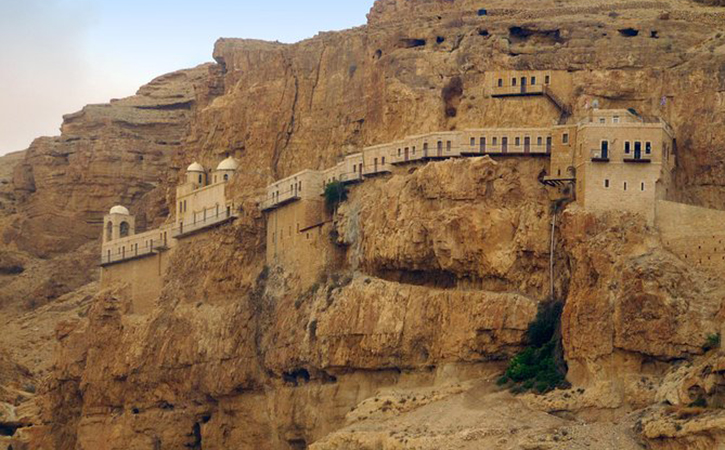
1. Jericho, West Bank - 11,000 years old

VIATOR

Its history was particularly tumultuous because the city was destroyed around 1,500 BC for a reason that still seems to remain rather obscure: an earthquake or an Egyptian invasion? Among the oldest cities in the world still inhabited is Jericho (Palestine), where archaeologists have found traces of habitation dating back to 9,000 BC. Located in the Jordan Valley, with the Jordan River to the east and Jerusalem to the west under Israeli occupation since 1967. Archaeological excavations have revealed traces of dwellings that are even older, around 11,000 years. Currently located in the West Bank, Jericho is also the lowest city in the world. Its altitude is around - 258m. Today, the town has more than 25,000 inhabitants. 

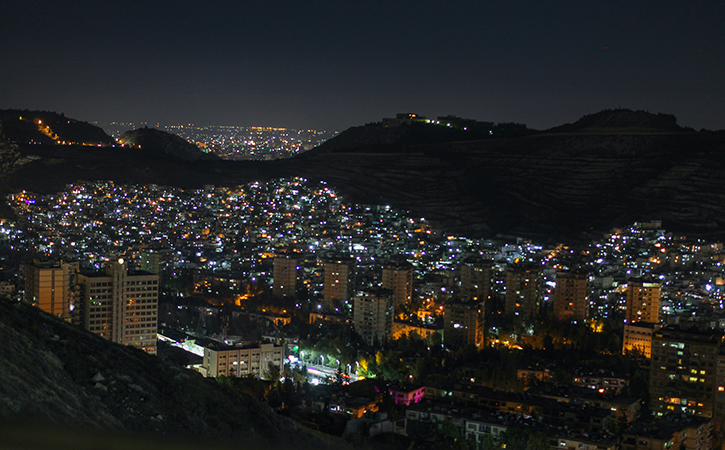
2.  Damascus, Syria – 11,000 years old

UNSPLASH

Cited by research studies and historical evidence as the oldest inhabited city in the world also named as the capital of Arab culture in 2008, Damascus may have been inhabited since 8,000 to 10,000 BC, But there is no evidence that it was an important city at that time. Damascus has been the preferred target of many kings and conquerors. Damascus was an important settlement region for the Arameans, who were responsible for implementing modern water network systems. Later, the city was conquered by Alexander the Great. Its wealth of historical sites made it a popular tourist destination until the recent unrest hit it. Since 1979, the city has been included on the UNESCO World Heritage List.

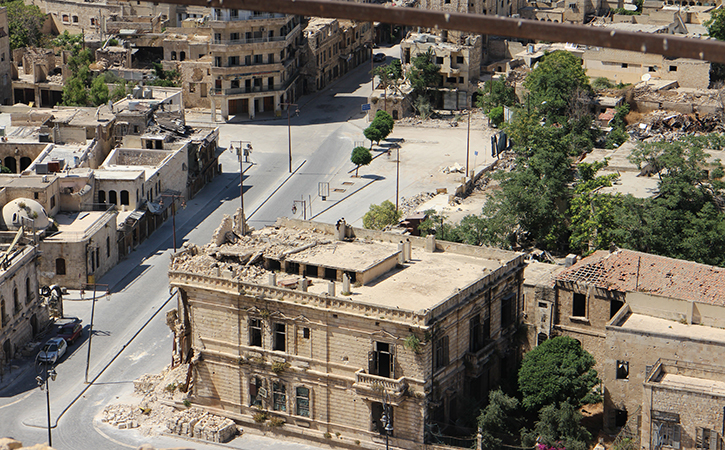
3. Aleppo, Syria – 8,000 years old

UNSPLASH

Located between the Mediterranean Sea and Mesopotamia is the most populated city in Syria with nearly 4.4 million citizens in its metropolitan area. Aleppo is undoubtedly one of the oldest cities in the world, already mentioned in Paleo-Babylonian times under the name of "Halab". While the ancient site is occupied by the modern city, it is hardly touched by archaeologists. The city was under Hittite (An ancient group of Indo-Europeans who moved into Asian Minor and formed an empire at Hattusa in Anatolia (modern Turkey) around 1600 BCE.) control until around 800 BC, before passing through Assyrian, Greek and Persian hands. It was then occupied by the Romans, Byzantines, and Arabs, besieged by the Crusaders, then taken over by the Mongols and the Ottomans. For several centuries, it was the largest city in the Syrian region and the third-largest city in the Ottoman Empire.

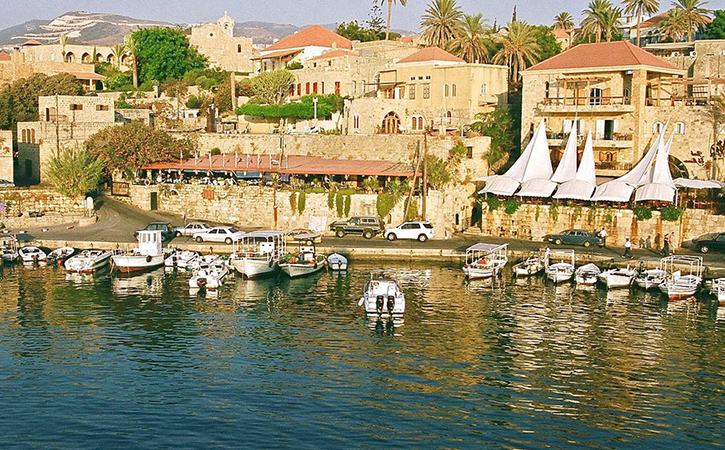
4.  Byblos, Lebanon – 7,000 years old

WSIMAG

Founded as Gebal by the Phoenicians, Byblos received its name from the Greeks, who imported the papyrus from the city. For centuries, the city has been the main exporter of papyrus to Greece. From the fourth millennium BC. The word Bible is derived from Byblos. The main sights of the city are ancient Phoenician temples, Byblos Castle, and the Church of St. John Mark, built by the Crusaders in the 12th century, as well as the medieval old town walls. The Byblos International Festival (music) is a more modern attraction. Located 40 kilometres from Beirut, the city attracts tourists from all over the world with its unique mix of beaches, mountains and ancient ruins.

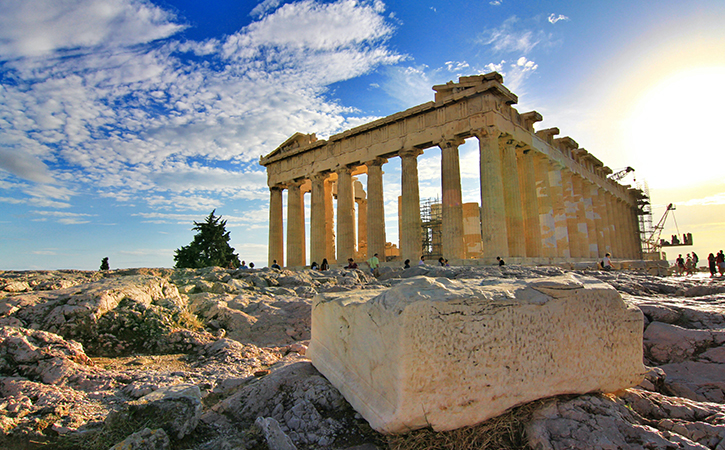
5. Athens, Greece – 7,000 years old

UNSPLASH

Cradle of Western civilization and cradle of democracy, Athens' heritage is still very evident. Athens has been inhabited for more than 7,000 years. Ottoman, Byzantine, and Roman civilizations left their imprints on the outward appearance of the city. This is the homeland of prominent philosophers, writers, playwrights, and artists. The city has had its ups and downs and has not always had the importance it has regained today.

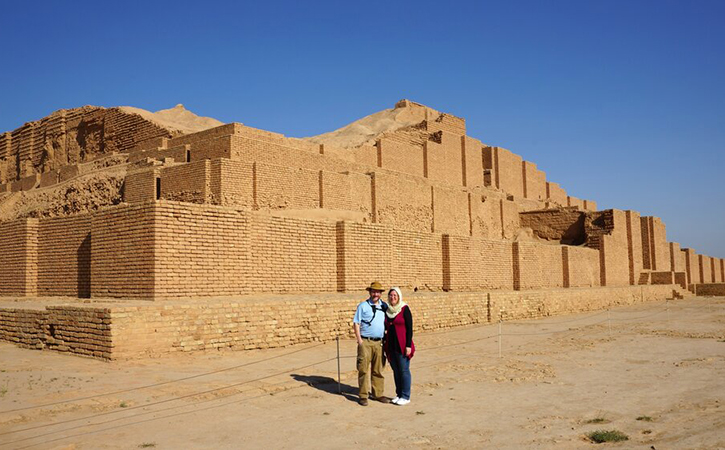
6. Susa, Iran – 6,300 years old

TEHRAN TIMES

Susa no longer exists today, but Shush is a small town that is more or less on the site of the ancient city. We can therefore see a certain continuity. Susa dates from 8000 BC was the capital of the Elamite Empire before it was captured by the Assyrians. It was then taken by the Achaemenids Empire under Cyrus the Greek. It is the city where the play of the Persians of Aeschylus takes place, an Athenian tragedy that is the oldest play in the history of the theatre. The modern city, Shushan, has a population of around 65,000 people and is also mentioned in the biblical books of Esther, Nehemiah, and Daniel.

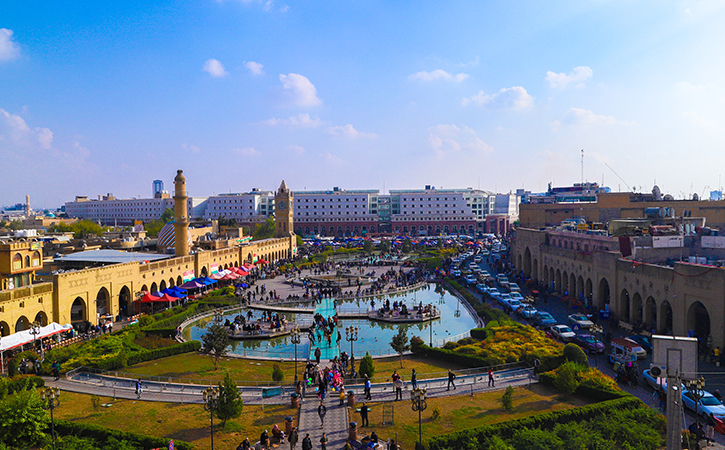
7. Erbil, Iraqi Kurdistan – 6,000 years old

UNSPLASH

North of Kirkuk is Erbil, which has been repeatedly dominated by the Assyrians, Persians, Sassanids, Arabs, and Ottomans. It was a major stopover on the Silk Road while its ancient citadel, which rises 26 meters in height, still overlooks the horizon.

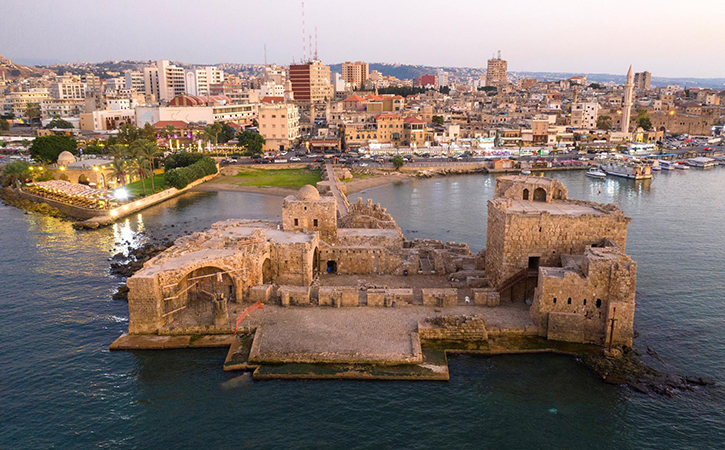
8. Sidon, Lebanon – 6,000 years old

CLOUDFRONT

Located 40 kilometres from Beirut, Sidon is one of the most important, and perhaps the oldest of the Phoenician cities and it would have been possibly the oldest. It was the base from which the great Phoenician Mediterranean Empire grew. Both Jesus and Saint Paul would have visited Sidon, as did Alexander the Great, who captured the city in 333 BC.

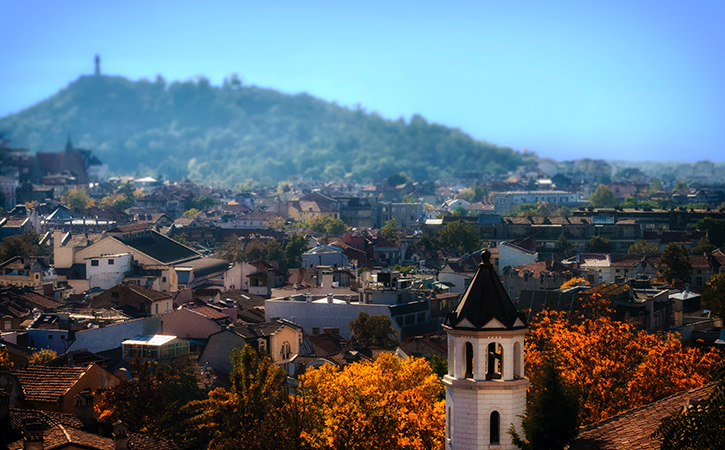
9. Plovdiv, Bulgaria – 6,000 years old

UNSPLASH

The second-largest city in Bulgaria, Plovdiv was originally a fortified Thracian city, before becoming a large Roman city. It later fell into the hands of the Byzantines and Ottomans, before integrating Bulgaria. The city is an important cultural centre and is home to many ancient remains, including an amphitheatre and a Roman aqueduct, as well as Ottoman baths. Throughout its history, it was dominated by Byzantines and Ottomans until, finally, the Bulgarians conquered it in the year 815. The name Plovdiv first appears in the 15th century. After World War II, communism was instituted in the country and the city became the focus of democratic groups that overthrew the regime in 1989.

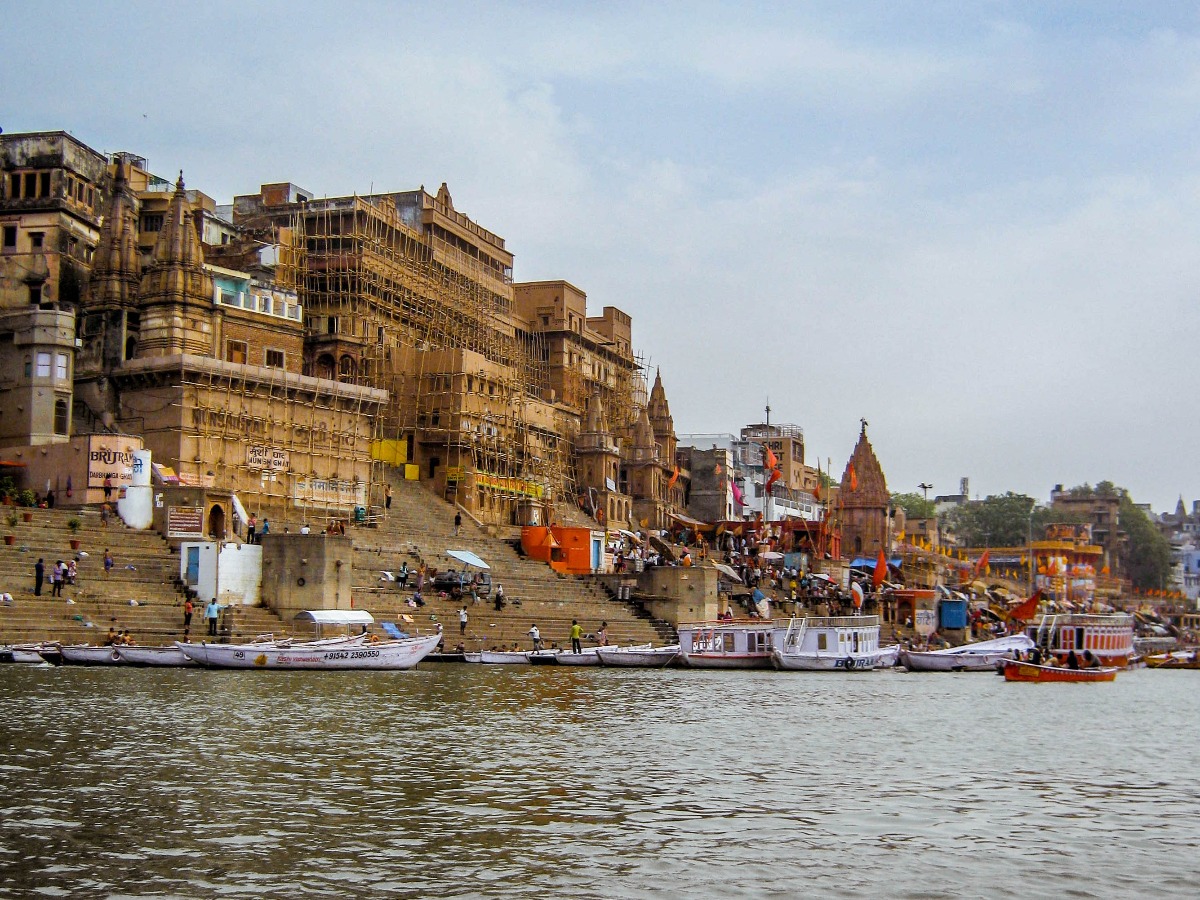
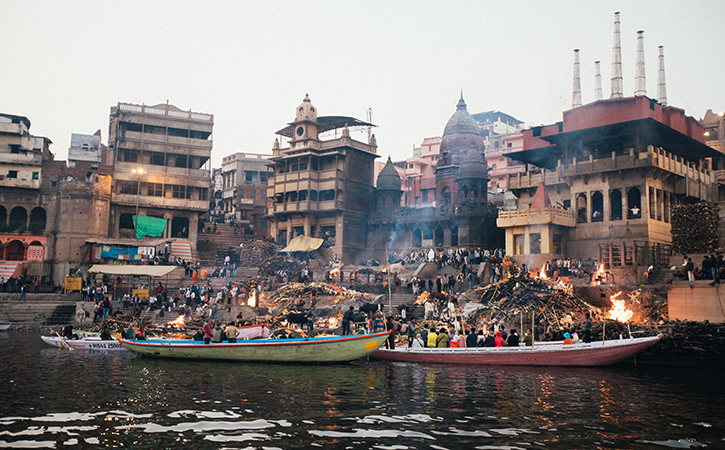
10. Varanasi, India – 5,000 years old

UNSPLASH

India is the world-famous centre of ancient civilisations, religions, and spirituality, and at the same time, the cradle of the oldest cities in the world. The sacred city of India Varanasi. formerly known as Benares, has been a religious and cultural centre for at least 5000 years.

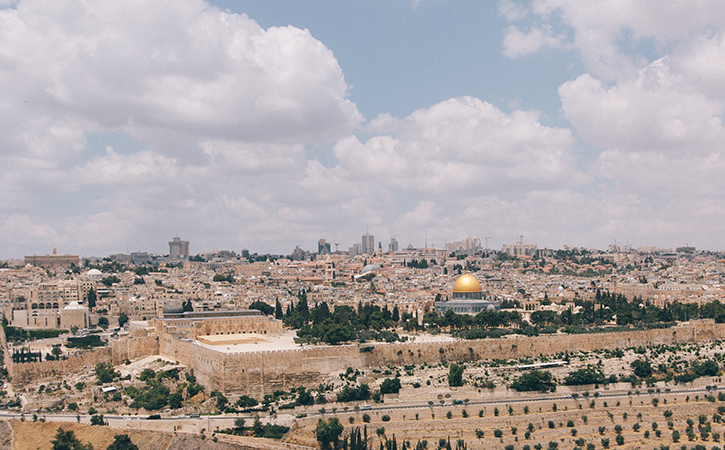
11. Jerusalem, Israel - 5,000 year old

UNSPLASH

Jerusalem is one of the cities that is believed to be about 4,000 to 5,000 years old from today. But this city holds its own place in the world because the mixed culture of three religions is seen here. The historical sources of these three religions are found here, Judaism, Christianity and Islam. The city of Jerusalem is considered a religious city. And it has a long history of struggle. Historian Eric H. Cline has written that the city was destroyed at least twice and 23 times the city was besieged and 52 times attacked. And about 44 times it was captured and lost and captured again